
What is the Senate?
Every Austrian public university has three governing bodies (Senate, Rectorate, University Council). The Senate is comparable to a parliament in which members from all groups of the university community are represented (students, professors, academic and artistic staff, general staff). 6 of the 26 members are students. The Senate takes on supervisory, advisory, legislative, and strategic leadership tasks at TU Wien.

Who are we?
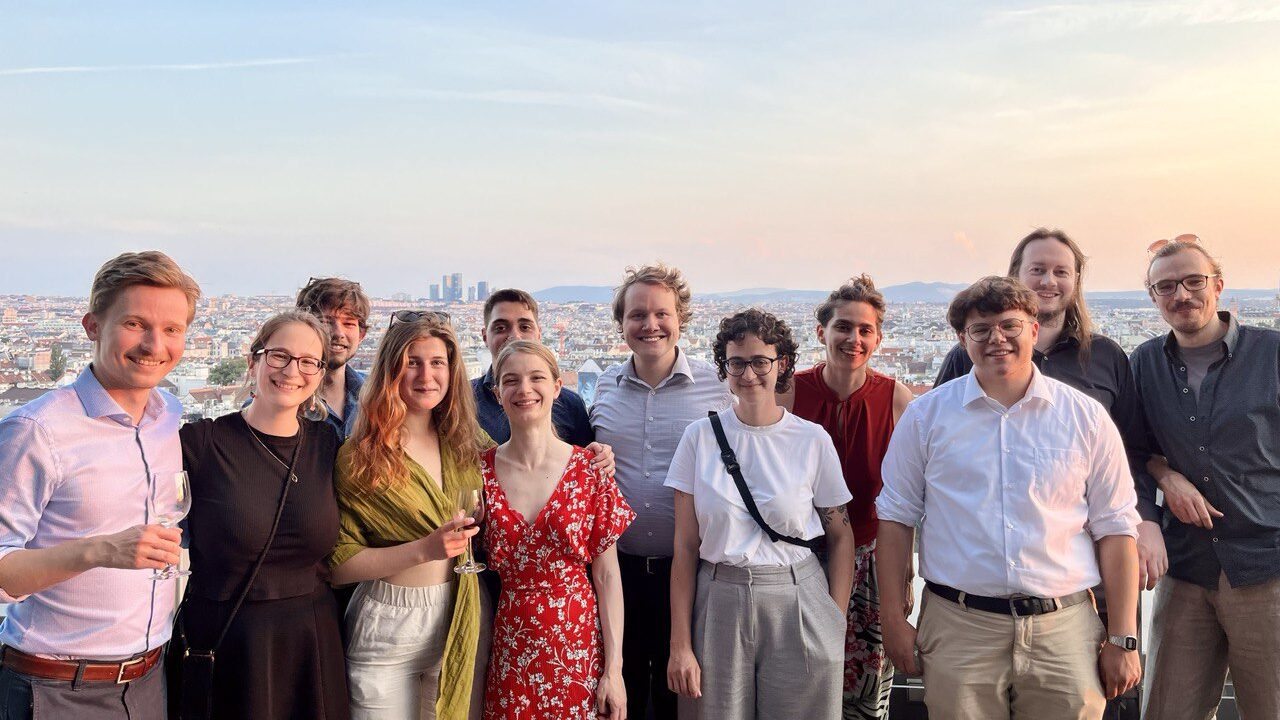
We are students from all eight faculties, delegated by the University Representation.
Voting members:
Katharina Kralicek
(2nd Deputy Chair of the Senate)
Paul Koo
(Representative of the group)
Theresa Tengg
(Representative of the group)
Gregor Fischer
Klara Fasching
David Mooslechner
Substitute members:
Boryana Badinska
Godwin Biziyaremye
Josef Fraczek
Pia-Marie Graves
Sabine Gürtler
Timo Herzog
Lea Holter
Simon Los
Jean Pierre Matriciani
Noah Meister
Loretta Pavlis
Ramon Rigal
Elise Scheiber
Cassandra Rosa Schober
Lukas Wurth
Moritz Zebenholzer
Fedora Herzog
Alexander Hold
David Kaufmann
Jasmin Kunze
Philipp Petrac
Astrid Albrecht-Kramreiter
Martin Baumann
Lisa Geiginger
Thomas Kolb
Katharina Schrom
Lisa Blenk
Christoph Ribisch
Tasks and projects
The Senate deals with a wide range of legally defined tasks, including collegial bodies, the statutes, and the curricula. The Senate also plays a key role in the election of the Rectorate and in the development plan.
As students in the Senate, we take part in these tasks together with all other groups; in addition, we also pursue further projects—formally through the Senate, but also informally beyond it.
Projects include(d), for example:
- § 21a Study law provisions
- Suggestions and demands catalogue for the new Rectorate
- Data collection on gender + diversity, dropout statistics
- Co-determination in collegial bodies (enshrining student members in 99(1) procedures, expanding student participation in appointment procedures)
- Statements on amendments to the Universities Act (UG) or other relevant legislative amendments